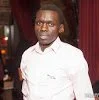
Dr. Yak Nak

Current City: Columbia, Missouri
Year arrived in the US: 2000
School: University of Missouri (Medicine), Johns Hopkins University (MPH), University of Arizona (BSc.)
Academic Programs:BSc., Neuroscience and Cognitive Sciences, MPH, Master of Public Health, Doctor of Medicine
Occupation: Psychiatry Resident | University of Missouri
1: Can you tell us a little about yourself and your background?
My family moved to the US in 2000, first to Boston, then to Kansas City in 2001. My dad was a pastor and led the South Sudanese community there, bringing different tribes together under one church. Since he moved back to South Sudan in 2013–2014, the community connections have become more scattered, which is why platforms like this one are so important to me.
2: What inspired you to pursue psychiatry and medicine out of all the fields available to you?
I've always been fascinated by the brain and behavior, even as far back as grade 4. In high school, I took a neuroanatomy class and it clicked. I was also a good basketball player, but I knew academics and medicine was the path I wanted. I studied Neurobiology and Cognitive Science at the University of Arizona, then went to medical school at the University of Missouri. I originally wanted to do neurosurgery, then shifted to orthopedics and spine surgery. But during a psychiatry rotation in my final year, I instantly fell in love with it. It combined everything — the human experience, the brain, social determinants of health, and a clear gap in the South Sudanese community. I believe I may be the first South Sudanese psychiatrist in the Western world, and I knew that was a lane where I could have a real impact.
3: What specific circumstances in your story made you succeed where other kids just aspire and don't get there?
My parents didn't prescribe a specific path — they just wanted me to seize the opportunities available in the West. What really motivated me personally was being observant of the choices made by older cousins, siblings, and community members, and seeing where those choices led. Seeing people get caught up in crime or the wrong crowd scared me. Seeing others finish school and build good lives motivated me. Ultimately it was fear — fear of wasting the sacrifice my family made to come here — that drove me on those late nights studying alone, or in office hours when I couldn't fully explain my academic struggles to my family who hadn't experienced that world.
4: What were some of the toughest challenges you faced on your path to becoming a doctor?
In high school, I attended a predominantly white private Catholic school and struggled with identity — balancing being South Sudanese while also fitting into a very different environment. In university at the University of Arizona, I was the first in my family to attend, and the weight of being on my own — thousands of miles from home, navigating everything independently — was enormous. It made me extremely homesick. In medical school, the academic rigor and pressure of caring for patients was intense. But the common thread across all three stages was community. Finding and building a community at each level is what kept me going.
5: You've started your residency — what does a typical day look like?
Residency is an apprenticeship model where you grow toward independent practice over four years. In psychiatry, the first two years focus on inpatient medicine — the most severely ill patients, often in a locked psychiatric unit. The last two years shift to outpatient clinic work. Each month in the first year, you rotate through different subspecialties — my first rotation is at the Veterans Hospital, followed by consultation psychiatry, then child and adolescent psychiatry, and so on. Days typically run 8 AM to 4:30 PM, with on-call shifts extending into the evening or weekends. Psychiatry places a heavy emphasis on physician well-being and work-life balance, which is reflected in how residency programs are run.
6: What do you find surprising or most impactful about working in psychiatry?
Addiction has been one of the most eye-opening areas. It is incredibly frustrating — patients can lie to you, relapse repeatedly, and you can't go inside their body to fix it for them. But when someone finally breaks through, the reward is indescribable. A patient that stands out to me was a 31-year-old South Sudanese woman with twins who battled severe alcohol addiction for years. She came to the psych unit many times. Then one day something clicked, and she committed to sobriety. She got her kids back, stabilized her life, and started a career as a nursing assistant. Watching that transformation is something I can't fully put into words. It also teaches you deep empathy for everyday life — when someone is short with you, your first instinct becomes wondering what they must be going through.
7: What energizes you most about medicine?
The one-on-one connection with patients gives me enormous reward. But what really gets me up in the morning is the scale of impact. When you help a patient, you help their family. A healthier family strengthens their community, and that ripples outward — to the city, the state, the nation, and globally. For me, helping a South Sudanese patient in the US can ultimately have an impact back home in South Sudan. That potential scale is something I find deeply exciting.
8: Have you had a mentor, and what impact did they have?
I've had many mentors — I'd say you really need a 'board of mentors.' But the CEO of my board is Dr. Michele Kilo, a developmental pediatrician in Kansas City. I met her through her son, who was my best friend in high school. When she found out I was interested in medicine, she guided me through every step — helping me choose my major, decide which medical schools to apply to, connecting me with physicians for shadowing, writing personal statements and residency essays, and talking through major decisions like whether to get a master's in public health. She's known me since I was 13, and without her, I genuinely don't know if I would be where I am today. That's why I'm so passionate about mentorship and why I want to give back through a network like this one.
9: Did your racial background and appearance make things harder or easier for you, or was it not a factor at all?
In almost every space I've ever been in, I'm different — the tallest, the darkest complexion, the only one from South Sudan, the only one who speaks Dinka. That difference invites comments and labels, especially during those vulnerable years when you're forming your identity. I struggled with it. But over time my family helped me reframe it — these are not negative things, they're gifts. My height, my complexion, my background, my culture — these are things to be proud of and to bring into a room. Once I made that mental switch, those same traits became tools for connecting and networking with people who were genuinely curious about who I am and where I come from. Identity was the real battle, but working through it made me stronger.
10: Looking back now as a physician in residency, what would you do differently if you were to start over? Have your aspirations been met?
I wouldn't change anything. And in many ways, my aspirations have been met beyond what I could have imagined. The fears, the challenges, the moments I wasn't sure I'd make it — they led to me becoming a full physician and soon a psychiatrist. I've already been back to South Sudan twice, helped build a school, and connected with orthopedic surgeons there. I've connected with South Sudanese doctors across the world. All those goals I had growing up are coming to life. If anything, I need to raise my goals, because I've realized that anything is possible. Ten years ago, I could not have imagined being where I am now.